Lexington, OK
Lexington Roofing Built to Last From the Drip Edge Up
We handle roof replacement, roof repair, inspections, storm damage repair and gutters for homes in Lexington, plus commercial roof work, and our crews travel to Purcell and Noble too. Our focus is the parts most roofers rush: starter courses, valley underlayment, step flashing and the nail line that holds each shingle down.
- New flashing, not reused
- Photos of what we find
- Written line-item estimates
- Permits handled for you
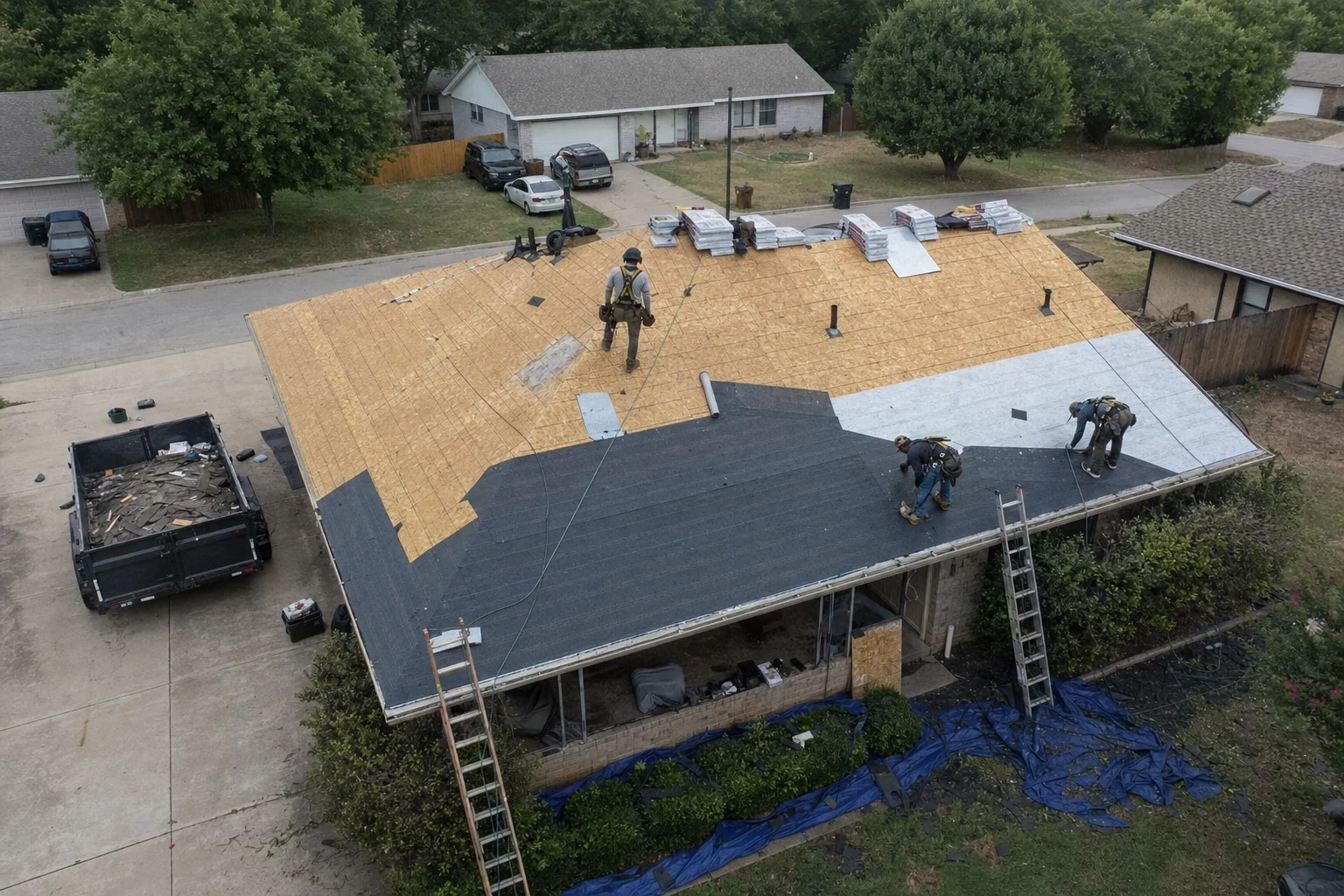
Roofing Services for Your Home and Business
Roofing Lexington holds an Oklahoma residential roofing license, an Oklahoma commercial roofing license and an Oklahoma general contractor license, so a reroof on your home and a low-slope roof on a business building fall under the same company. On homes we replace and repair shingle roofs, inspect roofs after hail or before a sale, repair storm damage and install gutters. On commercial buildings we handle roof replacement and roof repair. Open any service below to read the steps we follow and the factors that shape its cost.
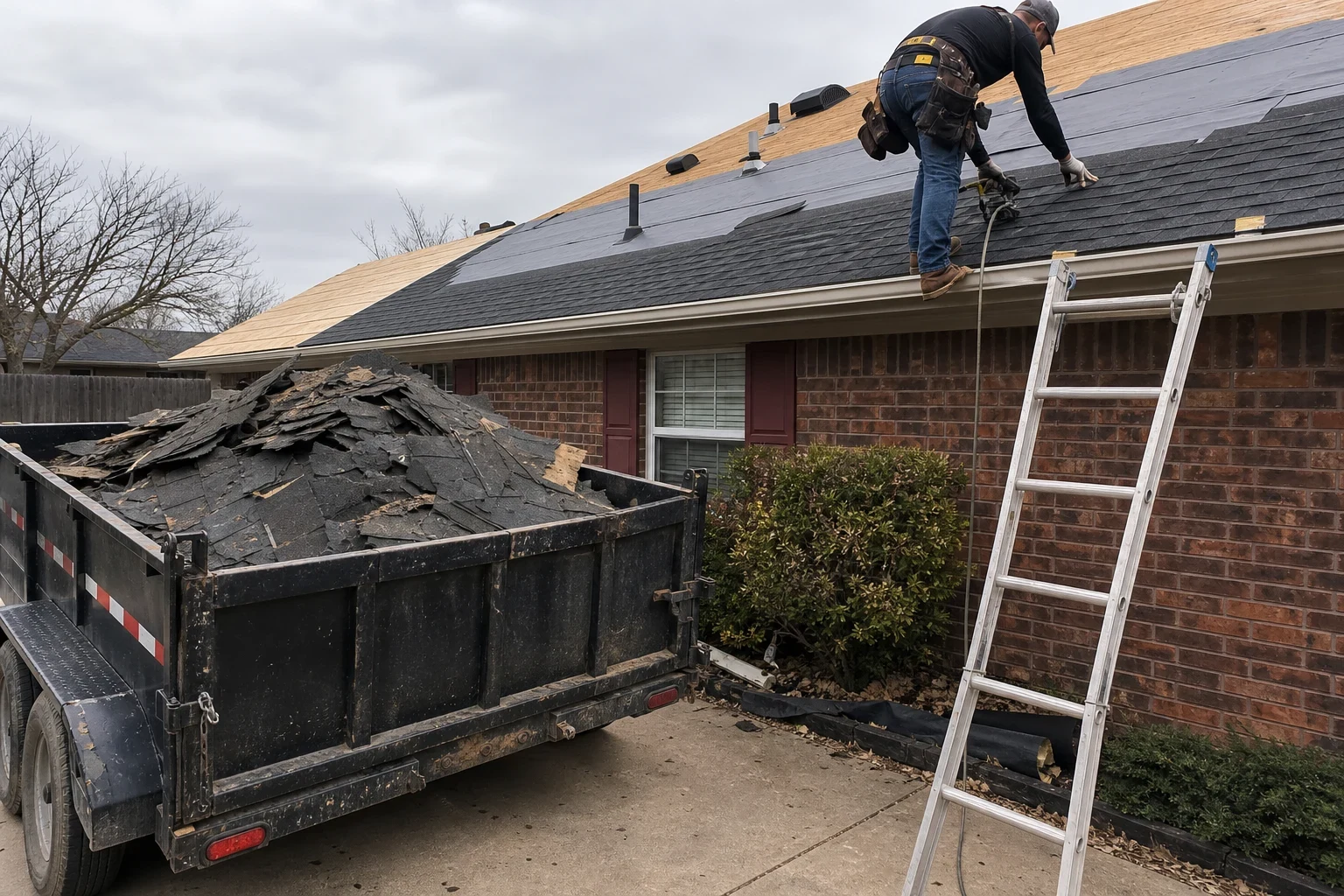
Roof Replacement
Full tear-off replacement with deck repair, new flashing, balanced ventilation and a nailing pattern that holds shingles down in high wind.
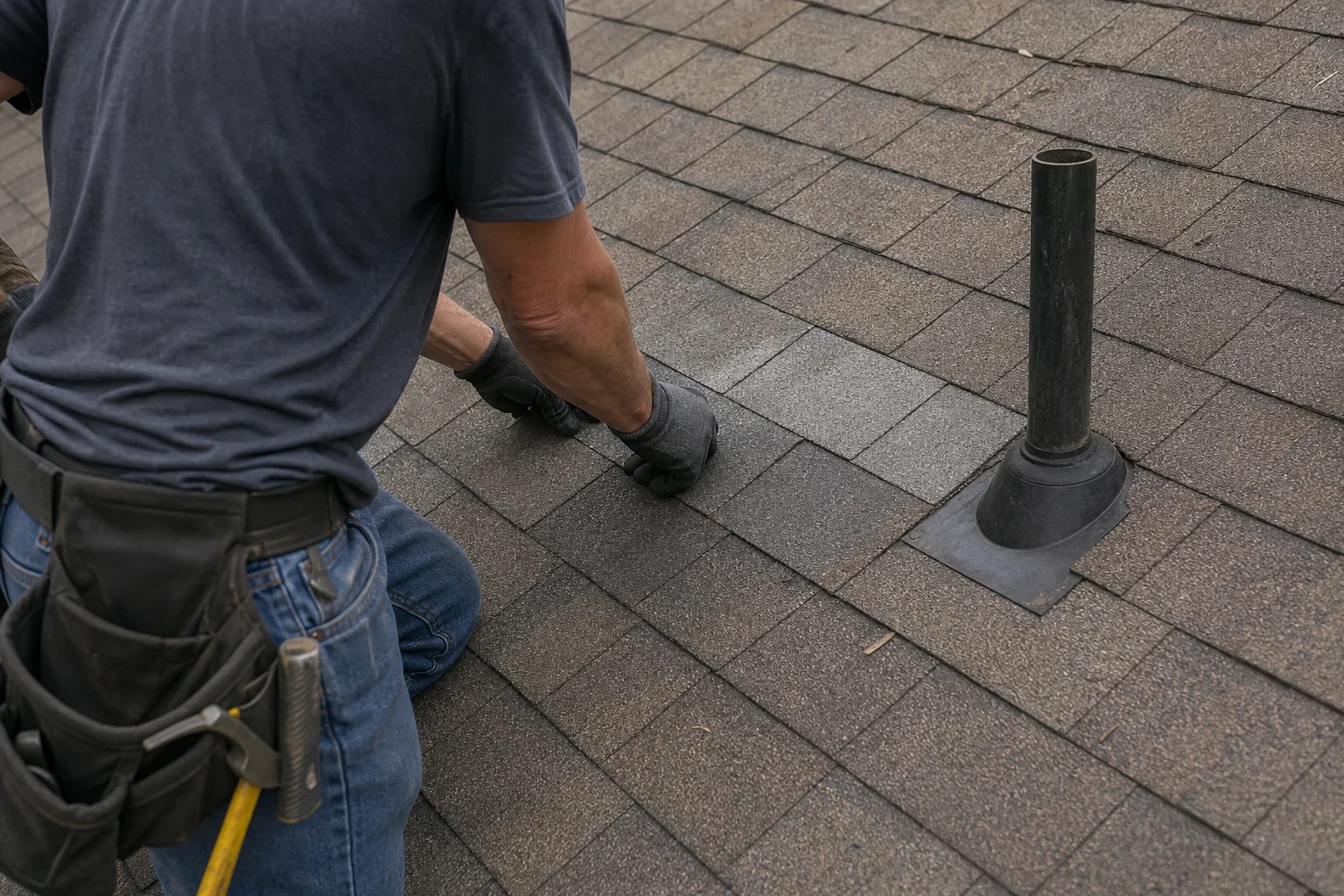
Roof Repair
We find the exact part that let water in, whether a cracked boot, lifted shingle or open flashing joint, and repair it so the fix holds.
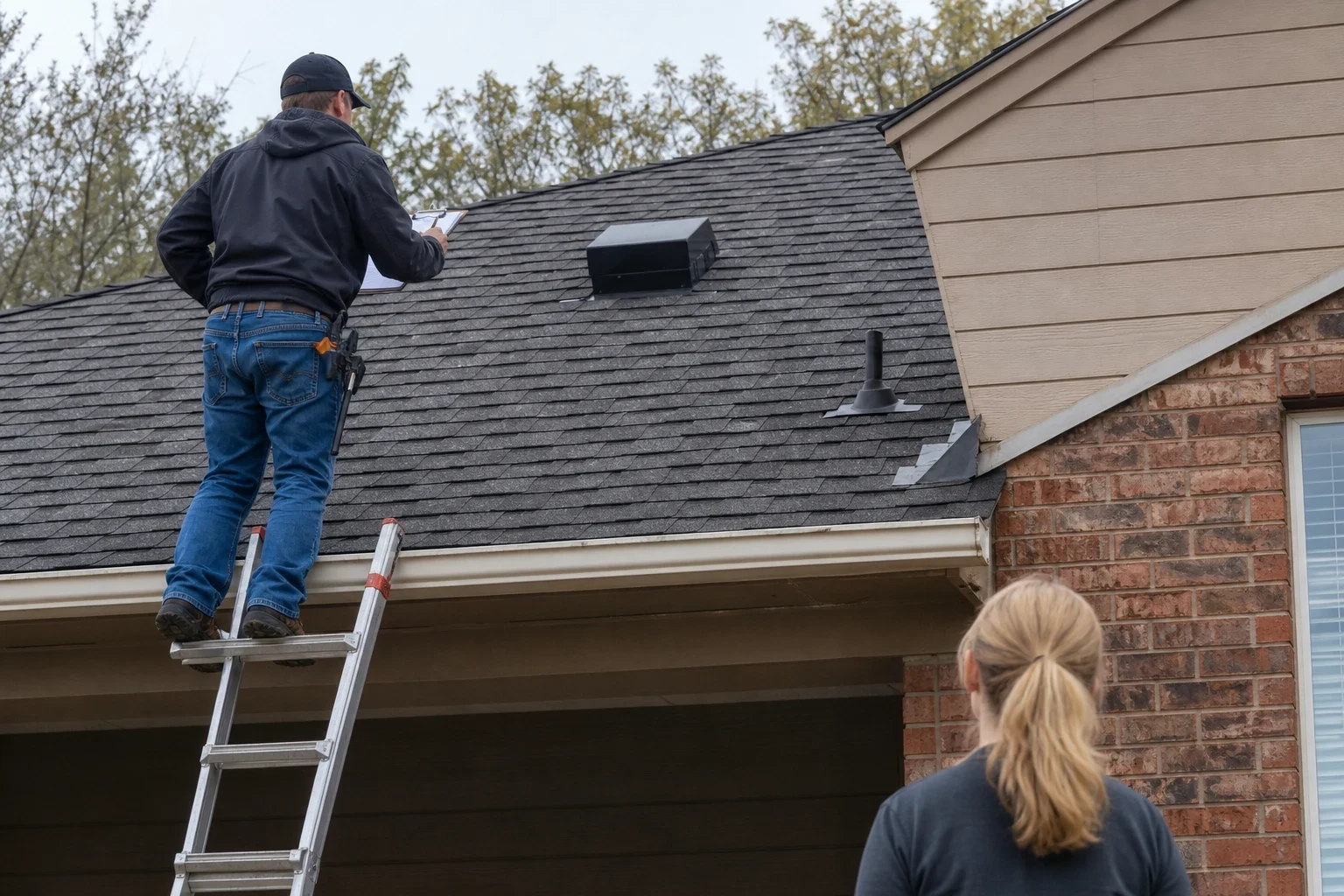
Roof Inspections
A close look at the parts that usually fail first, from pipe boots to step flashing, with photos and an honest read on how much life your roof has left.
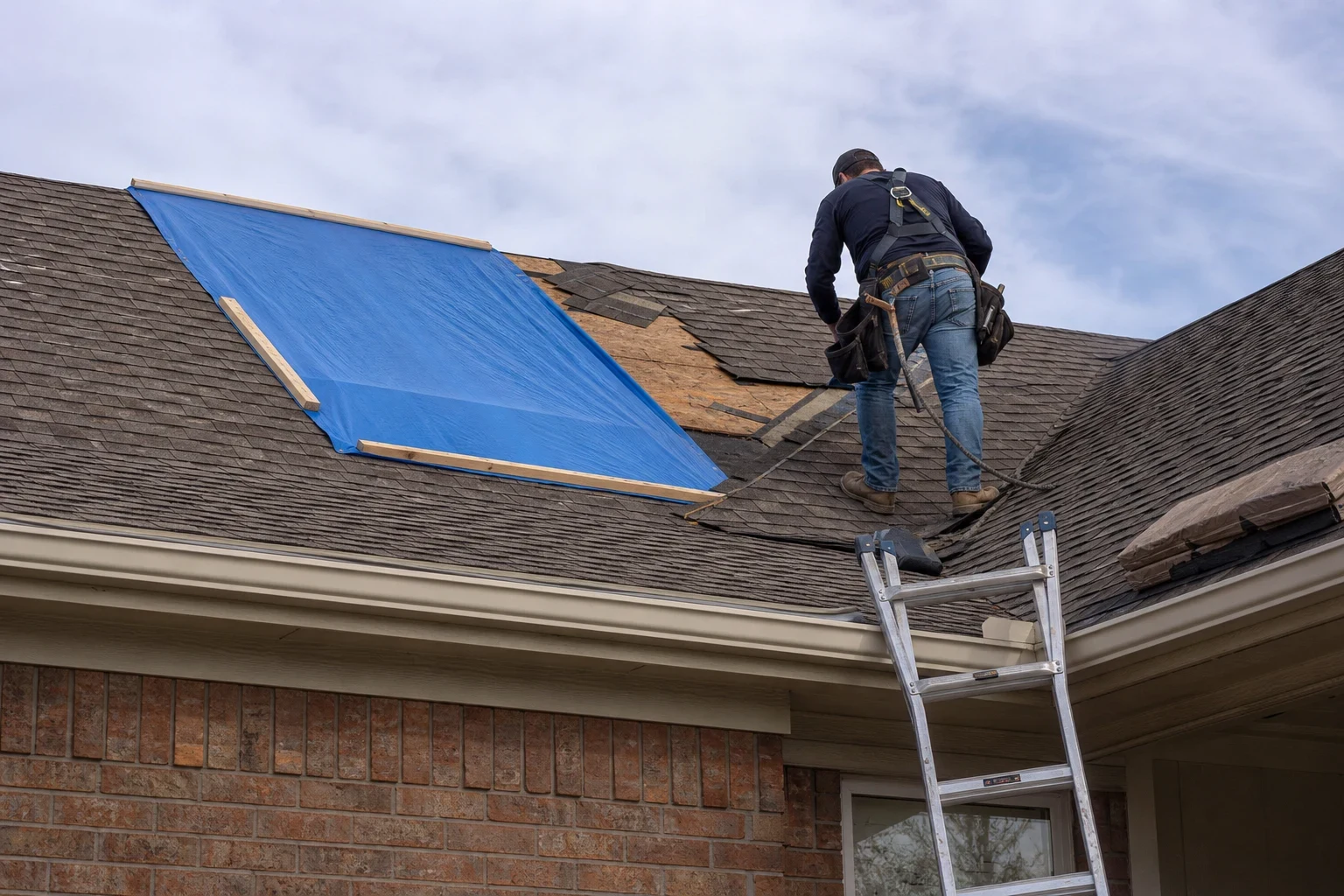
Storm Damage Repair
Hail bruises, wind-creased shingles and torn flashing found, photographed and repaired with the nailing and sealing details that hold up to the next storm.
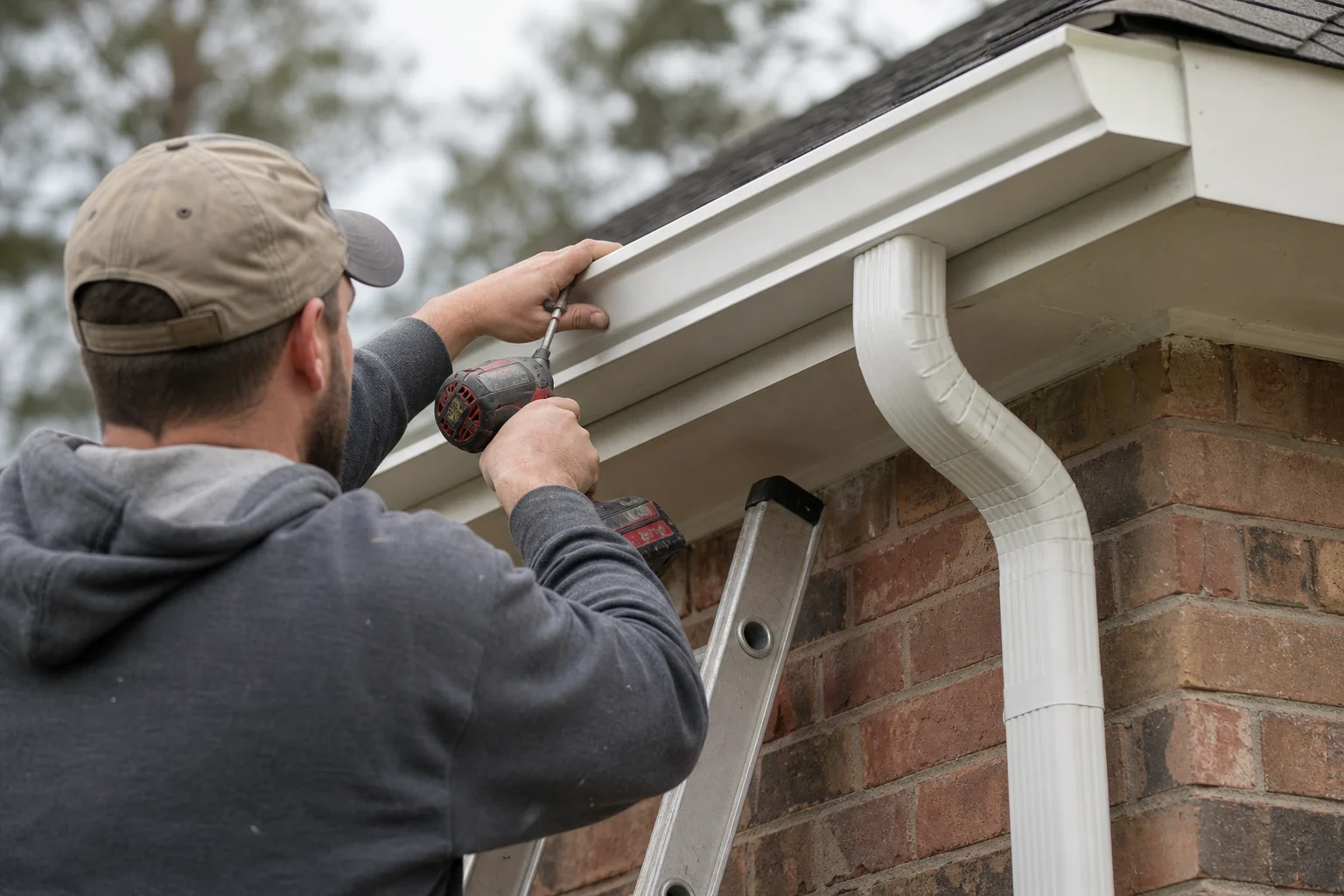
Gutters
Continuous gutters and downspouts sized to your roof, pitched to drain, and tucked under the drip edge so water stays off your fascia and away from your foundation.
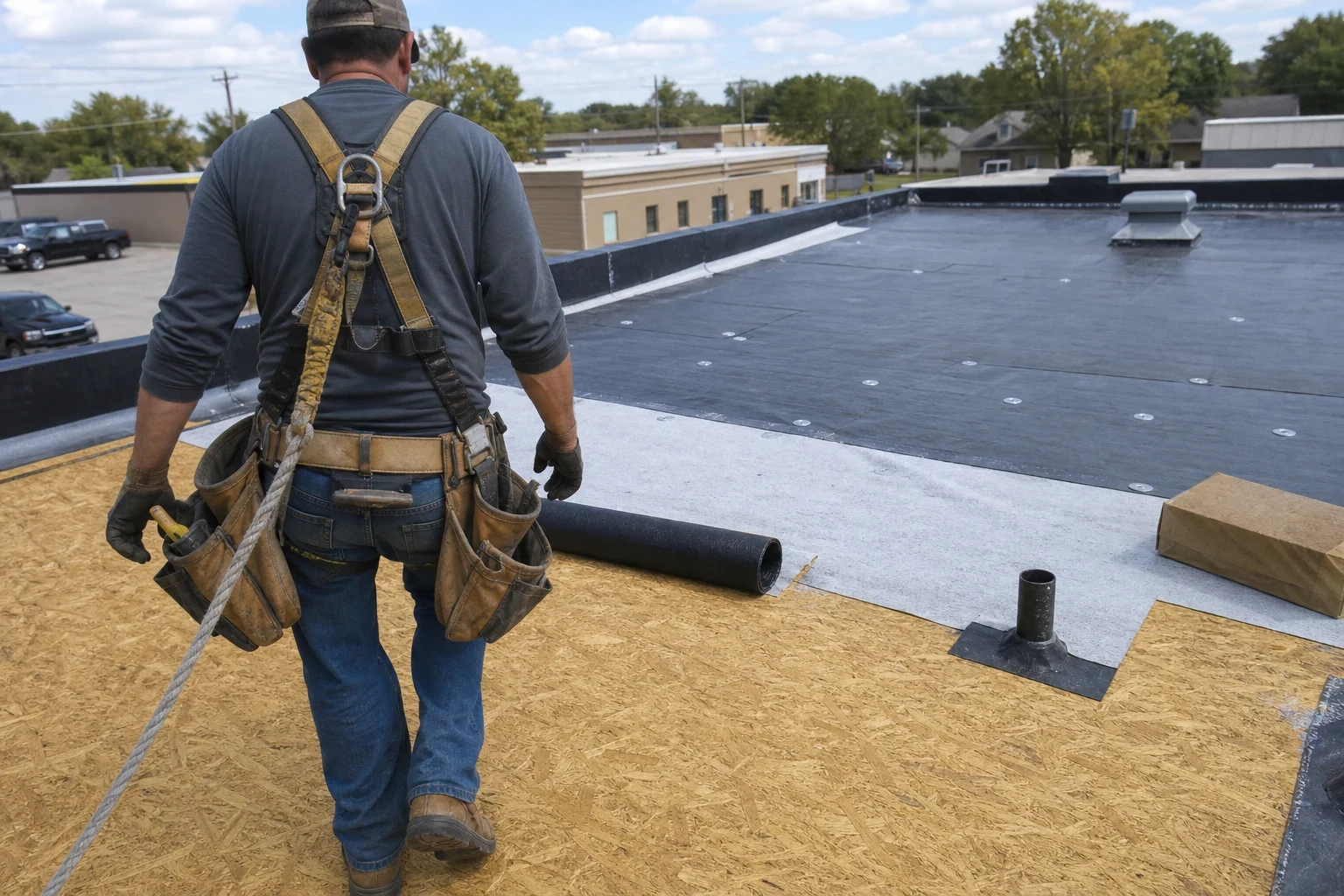
Commercial Roof Replacement
Full tear-off or recover of low-slope and metal commercial roofs, with tapered insulation, welded seams and edge metal done right.
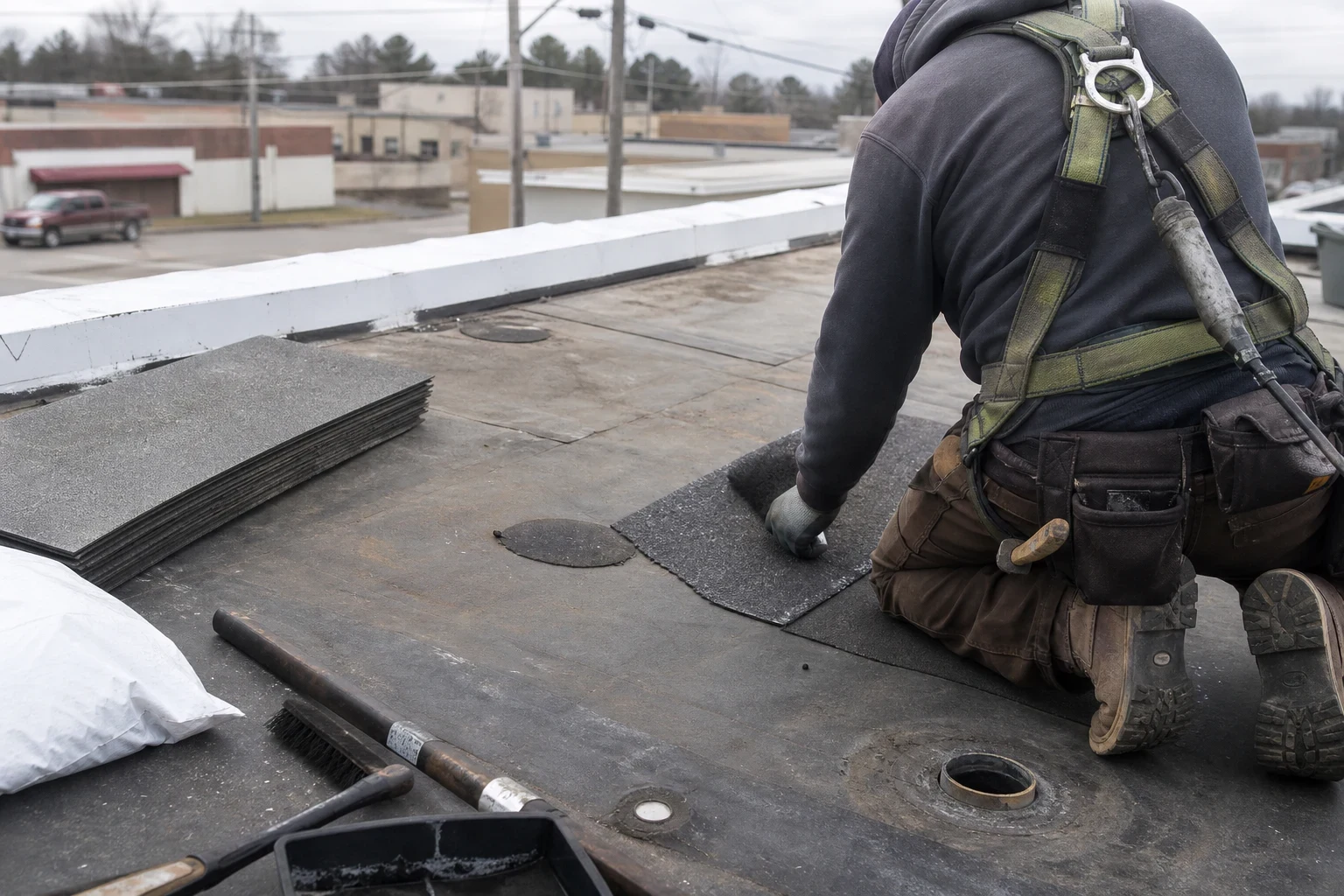
Commercial Roof Repair
We trace commercial roof leaks to the failed seam, curb flashing or drain and repair membrane and metal roofs with materials that match what is already there.
The Details That Decide How Long a Roof Lasts
Most roofs that fail early fail at an edge, a seam or a fastener, not in the middle of the field. That is where we spend our time.
- 01
Nails in the nailing strip
A shingle's wind rating only holds when each nail goes through the reinforced strip, straight and flush. Overdriven nails cut the mat, and high nails let tabs lift in the first strong gust. We check gun pressure on the roof and spot-check nail placement through the day, using the nail count the manufacturer specifies for high-wind installs.
- 02
Flashing replaced, not reused
Old step flashing bent back into place rarely seals the way it did the first time. We install new step flashing at sidewalls, new pipe boots at every plumbing vent and fresh counterflashing where a chimney meets the roof. These small pieces cause more leaks than shingles do.
- 03
Edges and valleys built in layers
Drip edge goes on at the eaves before the underlayment and over it at the rakes, so water always laps onto the layer below. A starter strip with a factory sealant line runs along every edge, and valleys get self-adhering membrane under the shingles.
- 04
Ventilation that actually moves air
An attic needs intake at the soffits and exhaust near the ridge in roughly matched amounts. Mixing ridge vent with old box vents can short-circuit the flow and leave hot, damp air trapped against the decking. We look at both ends before recommending anything.
- 05
Findings you can see
We photograph soft decking, cracked boots and lifted shingles and walk you through the pictures. You decide with the same information we have.
A Roofing Company That Works From the Edges In
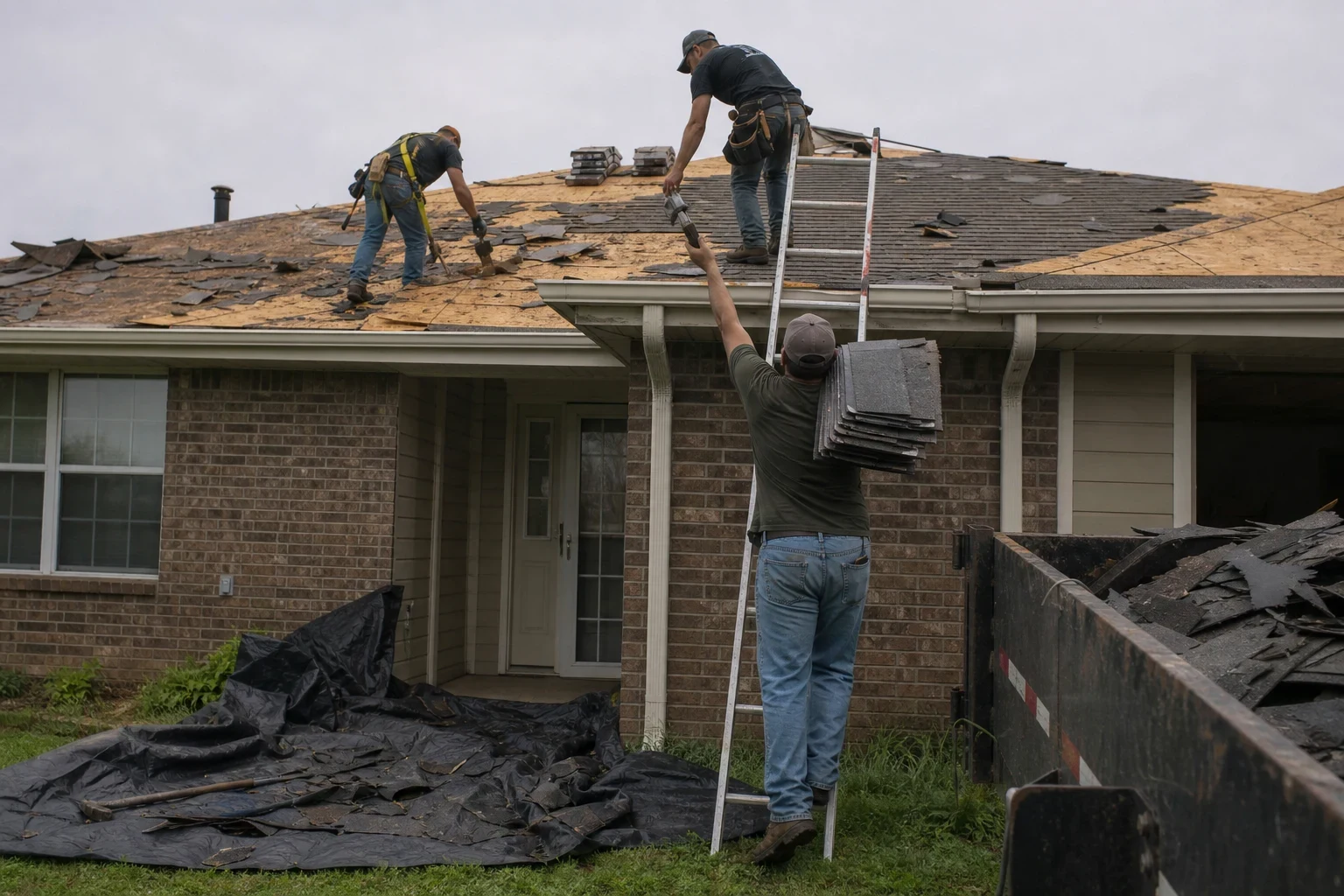
Roofing Lexington is a local roofing company serving homeowners and building owners in Lexington, Oklahoma, and the towns around it. We started from a simple observation: when roofs leak or blow off years too early, the cause is usually a skipped detail, like a missing kickout flashing, a reused pipe boot or nails driven above the strip.
So we build our jobs around those small parts. We explain what each one does and why we install it the way we do. You know what is going on your home before a single shingle comes off.
- License
- Oklahoma residential roofing license; Oklahoma commercial roofing license; Oklahoma general contractor license
How a Roofing Job Runs With Us
Most jobs follow the same four steps, whether it is a single pipe boot or a full tear-off.
- 1
A phone conversation first
You tell us what you are seeing, such as a ceiling stain, missing shingles or hail on the cars. We ask a few questions about the roof's age and history and set a time to come look.
- 2
On the roof and in the attic
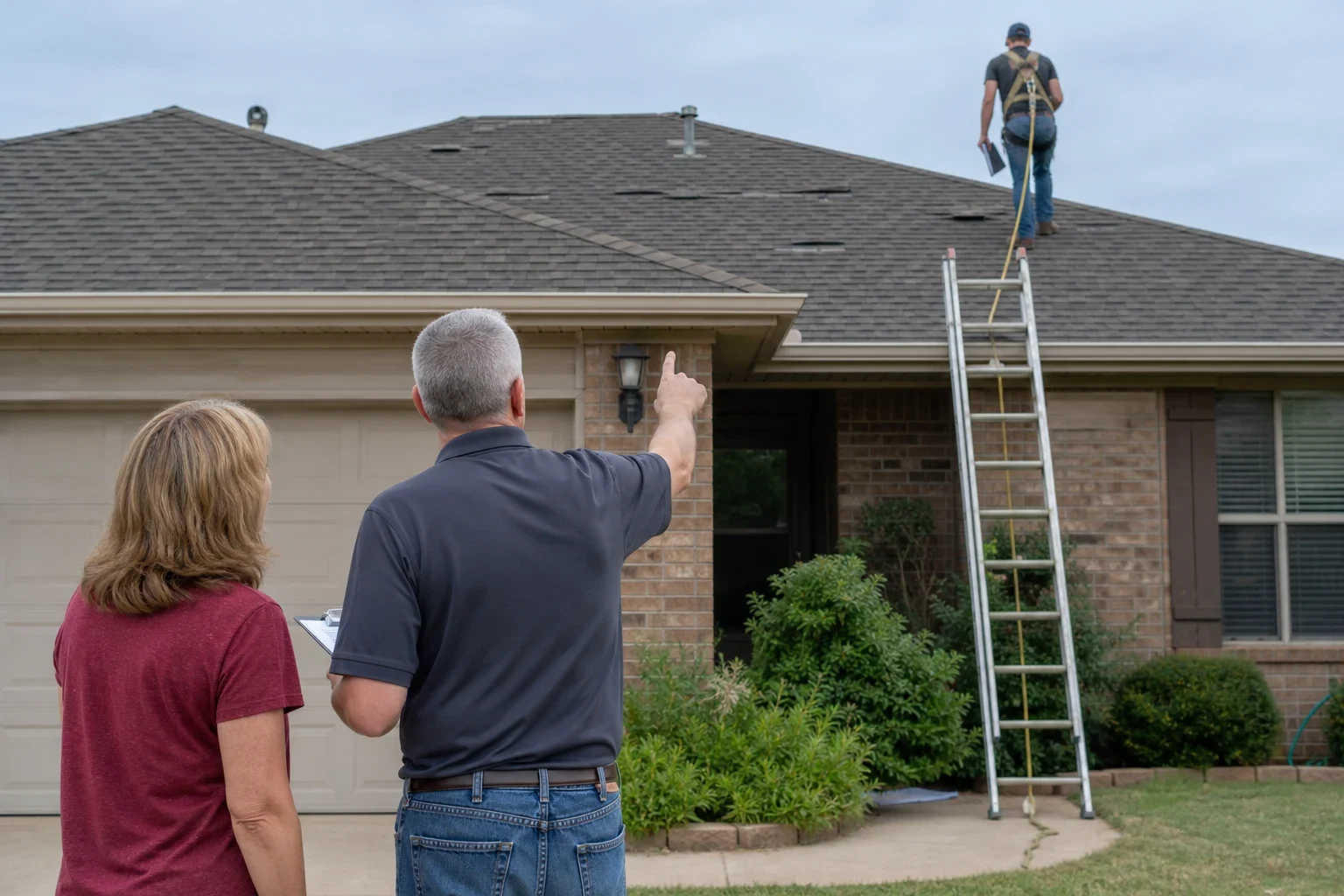
We check shingles, flashing, vents and gutters from above, then look at the decking underside and insulation from the attic when we can reach it. Photos come with us.
- 3
A written, line-item estimate
You get our honest read on repair versus replacement, with materials named and each line priced. If a repair will hold, we say so.
- 4
Install day and cleanup
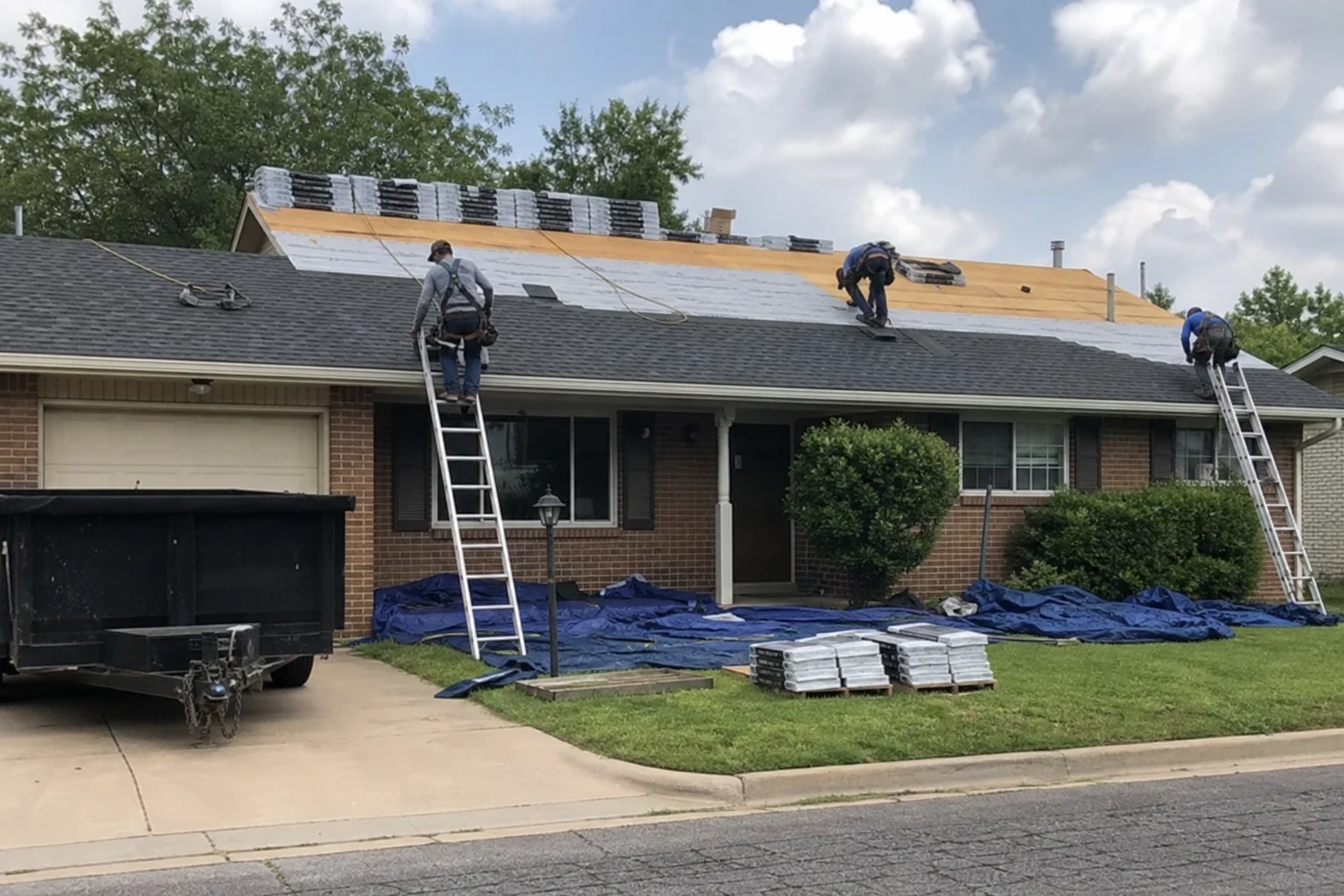
We tarp beds and protect the siding, tear off down to the decking, replace bad sheets, then build back up from drip edge to ridge cap. At the end we run a magnetic sweeper over the yard and driveway and walk the finished roof with you.
Where We Work
Our home base is Lexington, and we take roofing and gutter work across the surrounding area. That includes Purcell, Noble, Slaughterville and Goldsby, along with homes and commercial buildings in Norman. Central Oklahoma's spring hail, summer heat and winter freeze-thaw cycles test every roof here the same way, so we build the same way in each town.
- Lexington
- Purcell
- Noble
- Slaughterville
- Goldsby
- Norman
If you are just outside these towns, ask when you reach us by phone. We will tell you plainly whether we can schedule your job.
What Moves the Price of Roof Work
Two roofs with the same square footage can price very differently. The gap usually comes from what sits under the shingles and how hard the roof is to work on. Here is what we look at before we put numbers on paper.
We price after we have been on the roof and, where possible, in the attic. The written estimate lists each line so you can compare it with any other bid.
- Size and pitch
- We measure the roof's surface in squares, with one square covering 100 square feet. A steep pitch slows the crew and needs more safety setup, so each square on it costs more than on a roof you can walk.
- Layers to tear off
- A second layer of old shingles means more labor, more disposal weight and a closer look at the decking once it is exposed.
- Decking condition
- Plywood that has gone soft or started to separate near valleys, vents and eaves gets swapped for fresh sheets, so the underlayment and nails have solid wood to grip. Your estimate notes how many sheets we expect and what each extra one adds.
- Flashing and penetrations
- Chimneys, skylights, sidewalls and multiple plumbing vents each add flashing work. More penetrations mean more detail labor.
- Material choice
- Standard architectural shingles, impact-rated shingles and metal all carry different material and labor costs, along with matching underlayment and ridge components.
- Permits and access
- Permit fees, a tight driveway for the dump trailer or landscaping close to the walls all show up in the estimate.
Questions Homeowners Ask Us
Something not covered here? (405) 807-9564
Can my roof be fixed, or is it time for a new one?
That comes down to how far the damage spreads and how much life the shingles still have. A few lifted tabs or one cracked pipe boot on a roof that is otherwise sound is a repair job. Shingles that are brittle and shedding granules on every slope, or soft decking in several spots, usually mean replacement. We show you the photos and explain which way we lean and the reason.
How long does a roof replacement take?
Most single-family roofs are torn off and reroofed in one to two working days. Steep pitches, more than one old layer or a lot of rotted decking stretch that out, and so does rain, since we will not open a roof with storms in the forecast. Before your start date we tell you how many days to plan for, and if the weather pushes it, we call to reset the schedule.
My roof was hit by hail. How does insurance fit in?
We inspect the roof and document the hail and wind damage with photos and notes you can share with your insurer. The adjuster makes the coverage decision, not us. We are glad to explain what the adjuster's report says and how its line items compare with what your roof actually needs.
Do you work on commercial roofs too?
Yes. We handle commercial roof replacement and commercial roof repair for business buildings. The approach is the same as on a home: we find where water is getting in, show you what we found and price the work line by line. Each of those services has its own page with more on how the job runs.
Will you handle the permit?
Where the city or county requires a permit for roofing work, we pull it and schedule any required inspection. The permit cost is listed as its own line on your estimate.
Do you stand behind your workmanship?
Yes. Our work comes with a lifetime workmanship warranty. We go over what it covers when we walk through your estimate, so you know where it applies before the job starts.
Should I replace my gutters when I replace my roof?
Not always. If the gutters are sound and properly pitched, we can protect them during tear-off and leave them in place. If they sag, leak at the seams or sit too low to catch water off the new drip edge, replacing them at the same time avoids disturbing the new roof edge later. Our gutters page covers this in more depth.
Do I need to be home while you work?
You do not have to be, though we like to walk the roof with you before we start and again when we finish. Keep vehicles out of the driveway and pets inside, since tear-off is loud and debris falls near the walls.
Ready to Talk About Your Roof
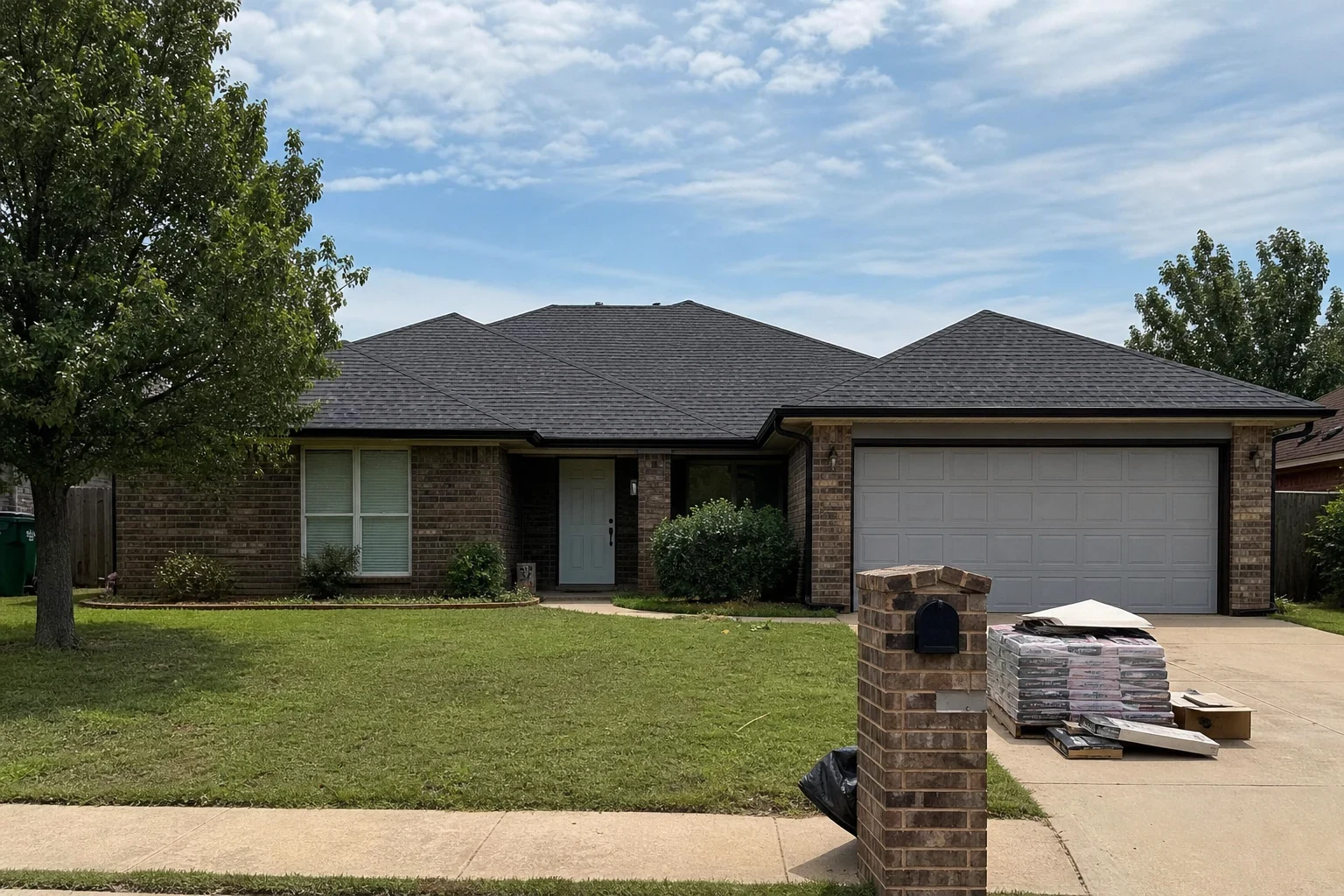
Tell us what you are seeing up there or on the ceiling below. We will set a time to look and give you a straight, written answer on what it needs.